

We started inside the suitcase.
Luggage has changed a lot on the outside. Inside, most of us still pack the way our parents did: push, kneel, leave something behind.
The problem is not that the case is too small.
It is that clothes are mostly air. The last ten minutes before check-out, the sweater you had to leave, the gifts that would not fit on the way home — these are space problems, not luggage problems. So we built the compression into the case, and made it one button.
Design, engineering, manufacturing.
One team, with the factory floor a short walk away. The engineer who drew the compression bag also sat with the zipper supplier and the mould shop. That is why the small things work.

Five decisions.
“We didn't start from the cheapest way to build it. We started from whether someone would want to use it twice.”
— David, lead engineer
01One long straight zipper, no U-turn.
A straight seal is tighter and the mouth opens wider.
02A bag mouth that stands up by itself.
A folded rim and a rigid support panel. Packing feels like filling a box.
03The pump lives in the case.
Nothing extra to carry or lose, no socket, no cable length. The 24-inch compresses just as well.
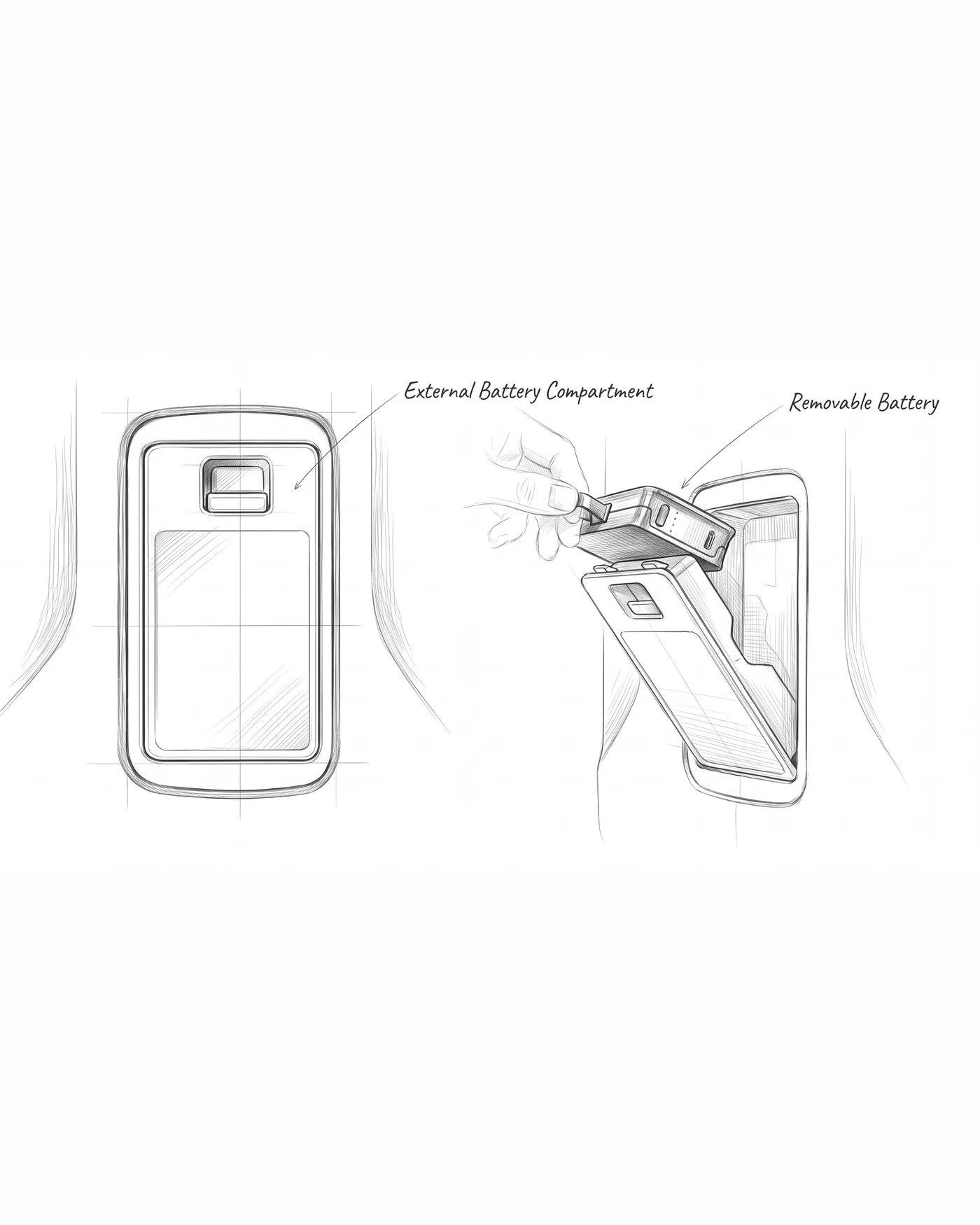
04Battery on the back, quick-release.
At the airport you take it out without opening the case.
05A lint chamber in front of the motor.
Clothes shed. The motor shouldn't have to deal with it.
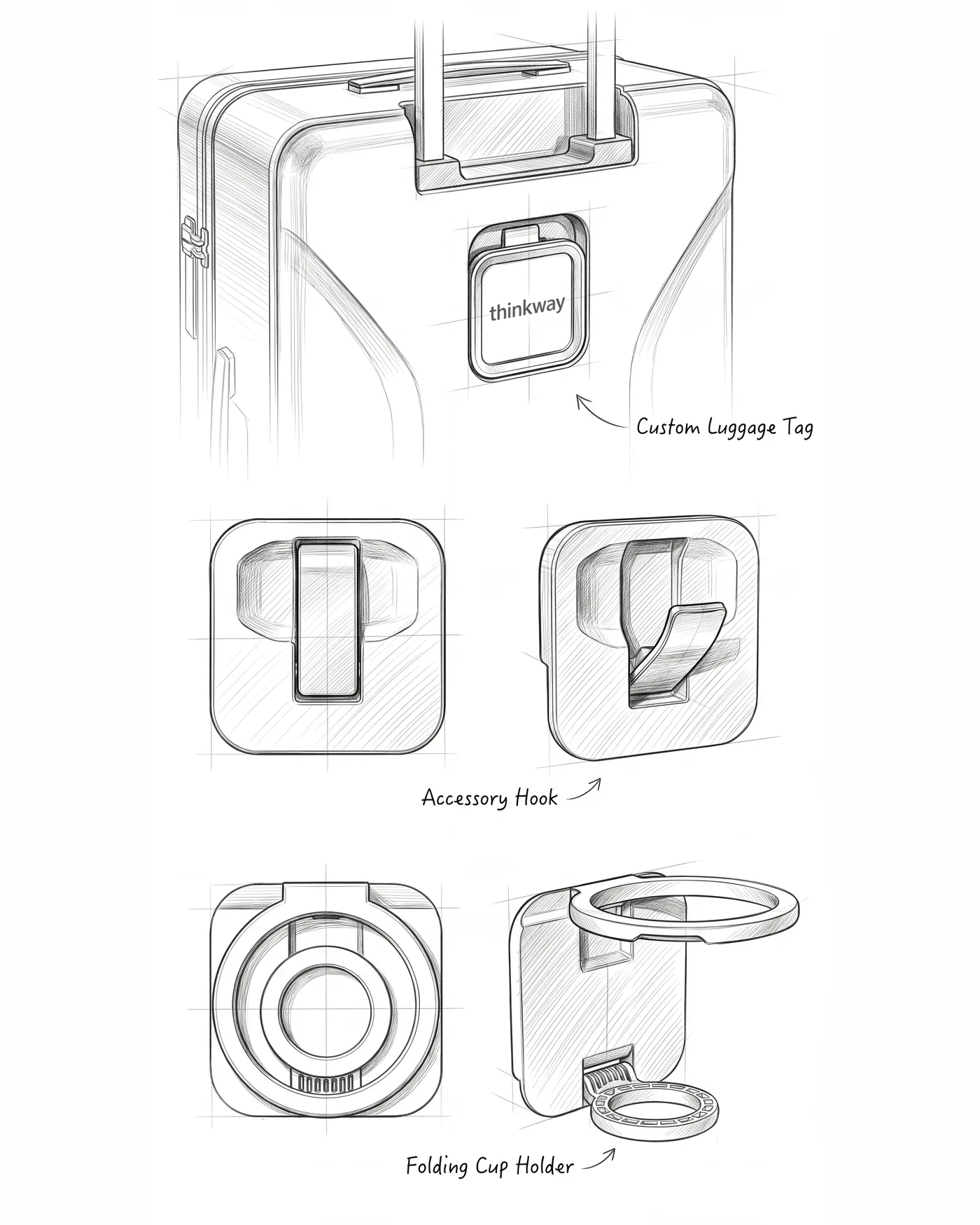
From the sketchbook.
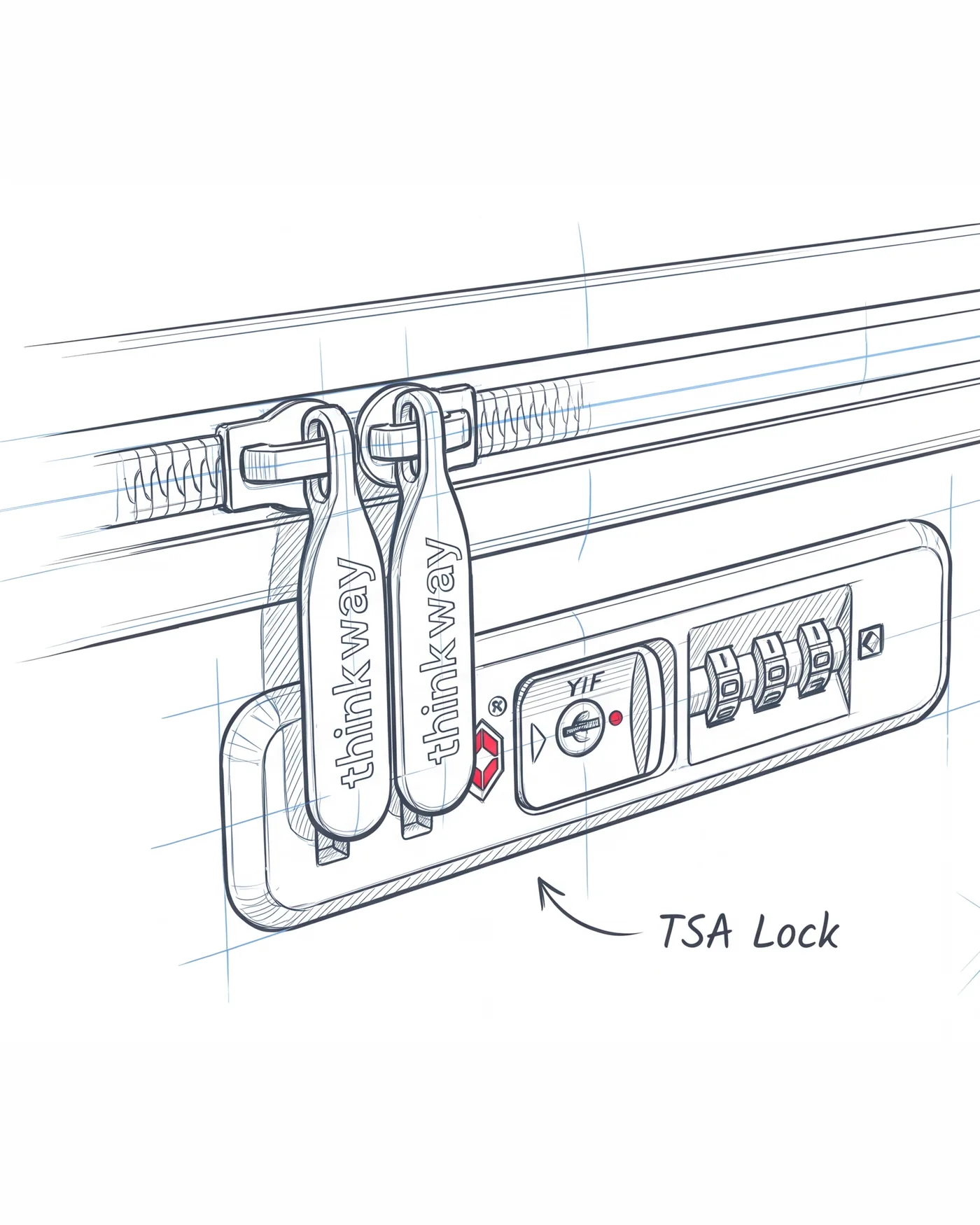
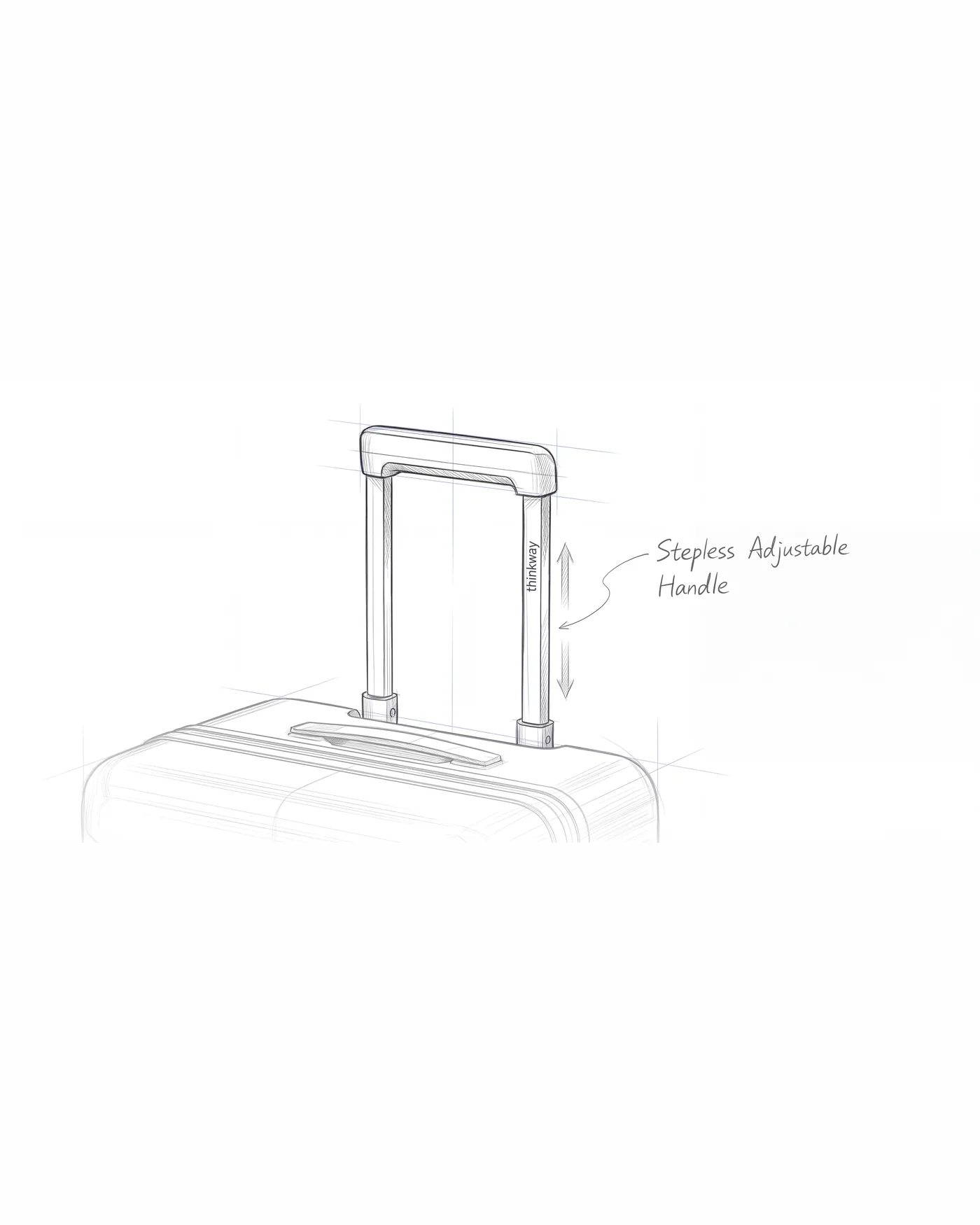
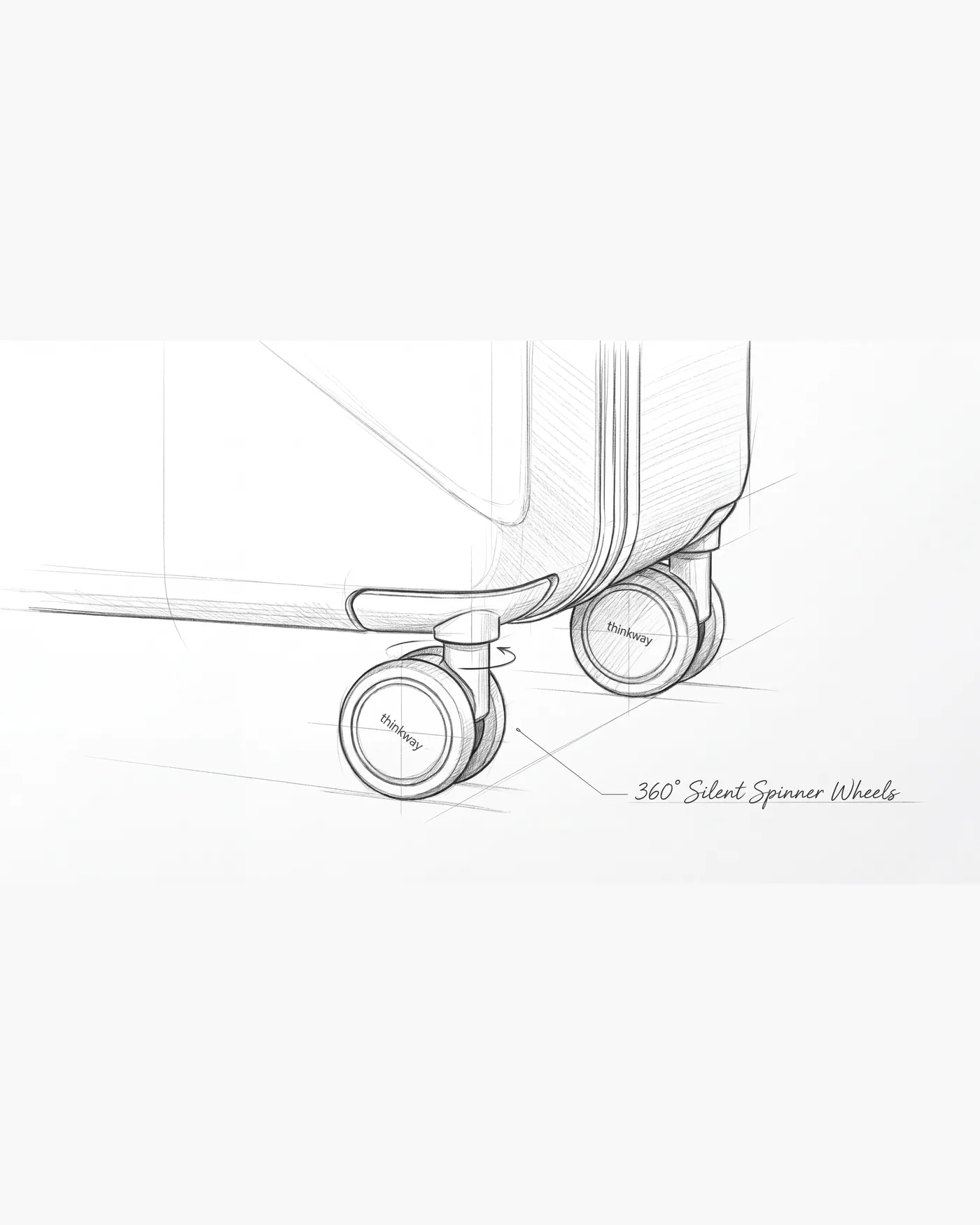
David's working drawings for the first ThinkWay: the motor and its filter, the bag mouth, the panel, the battery door.
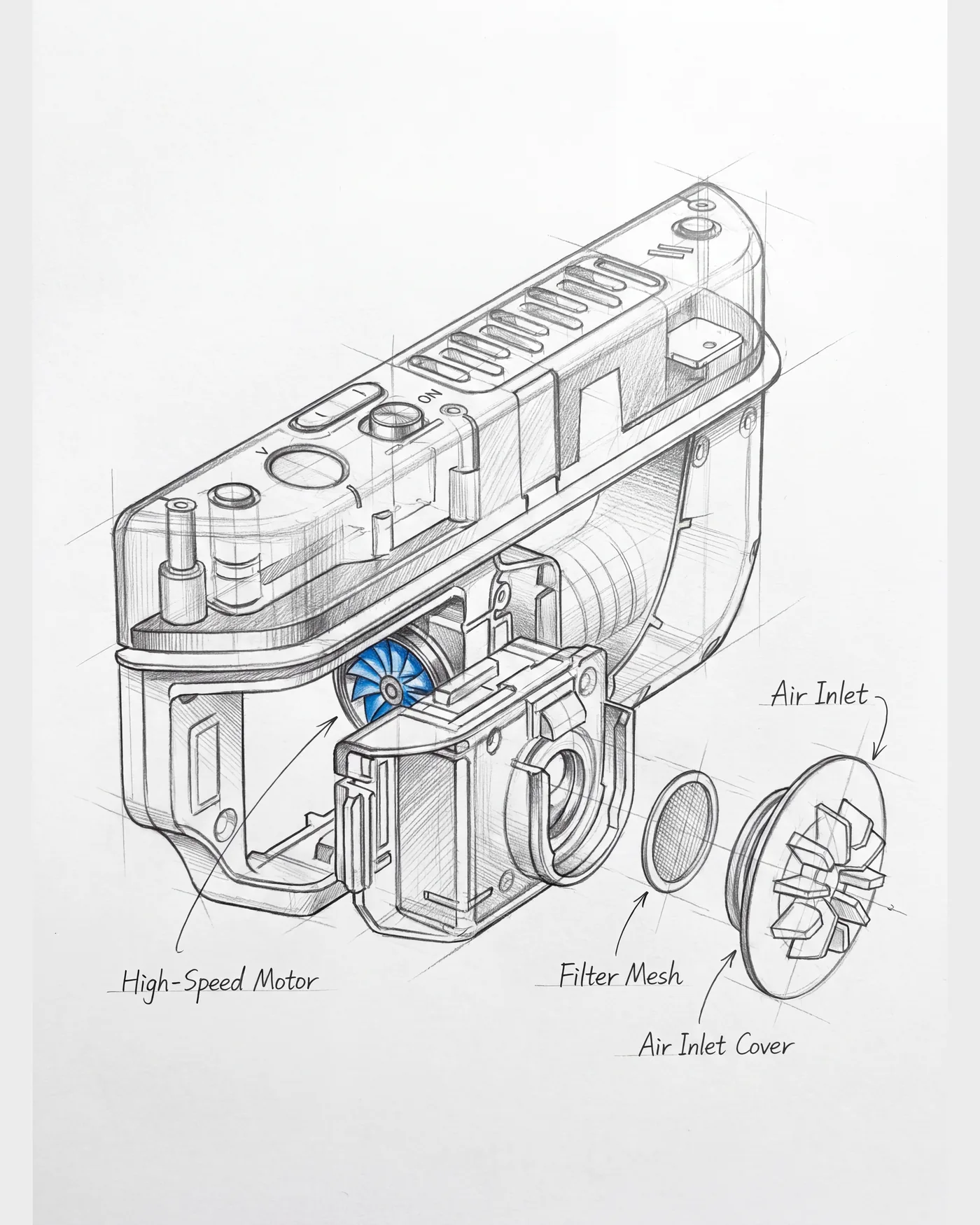
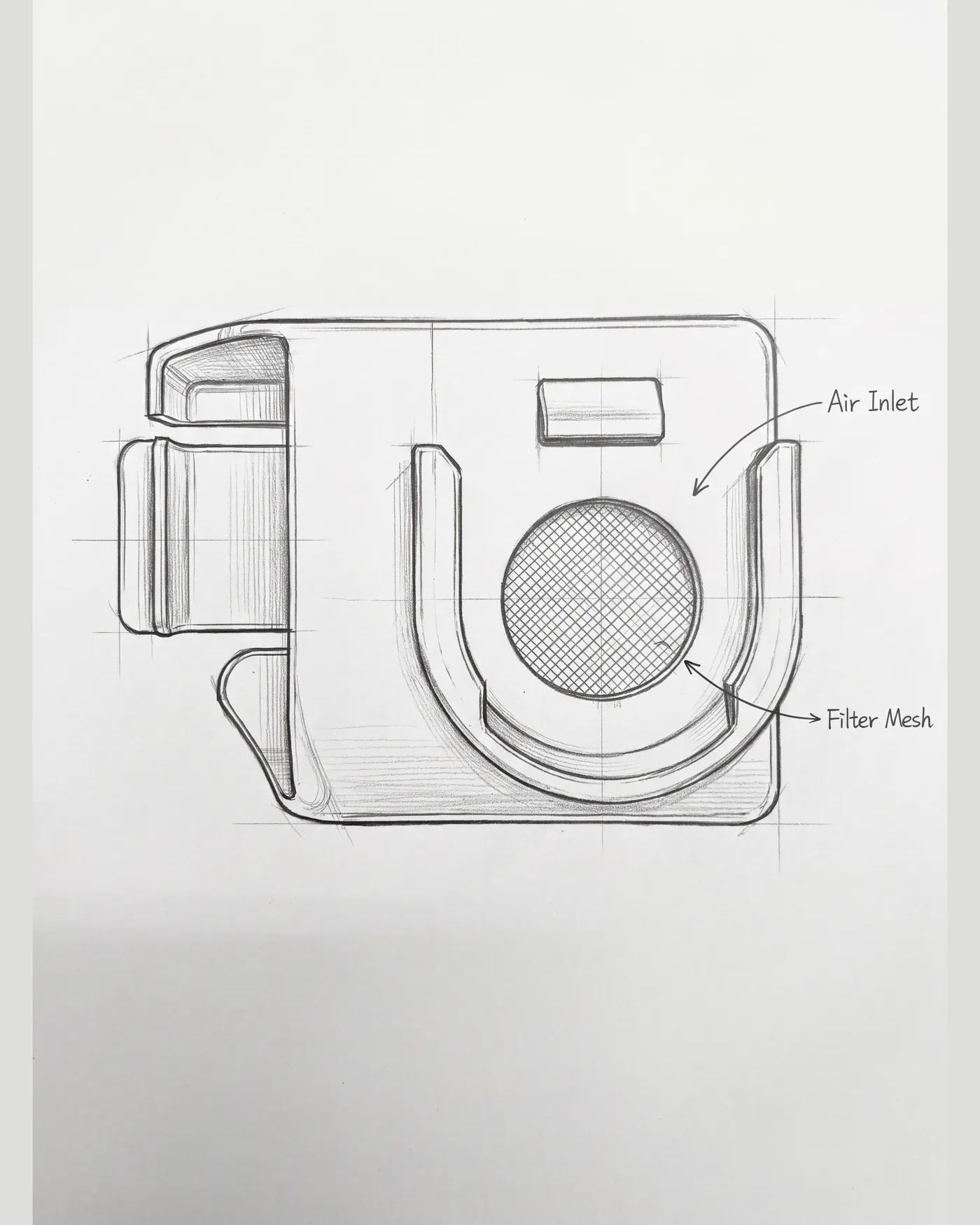
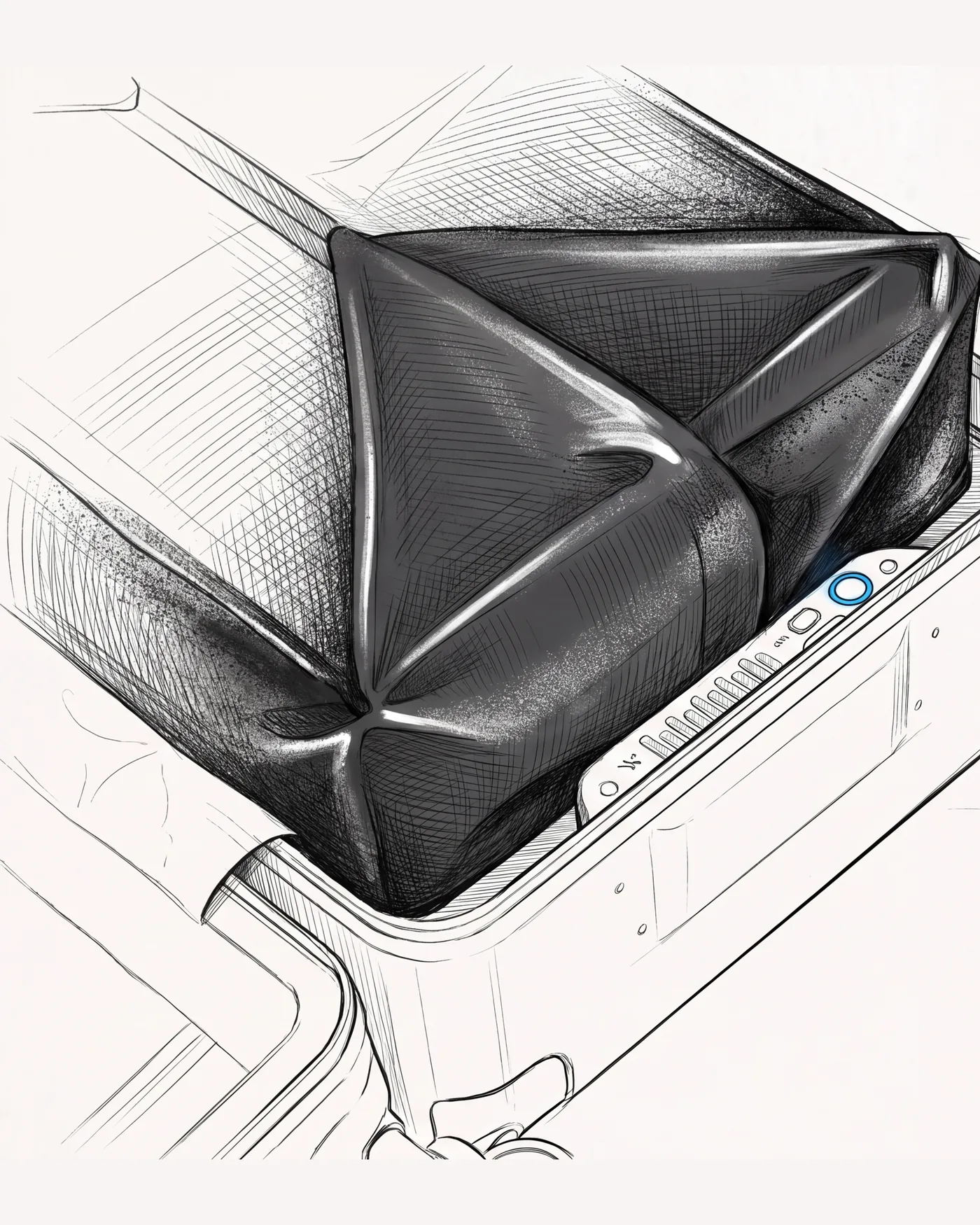
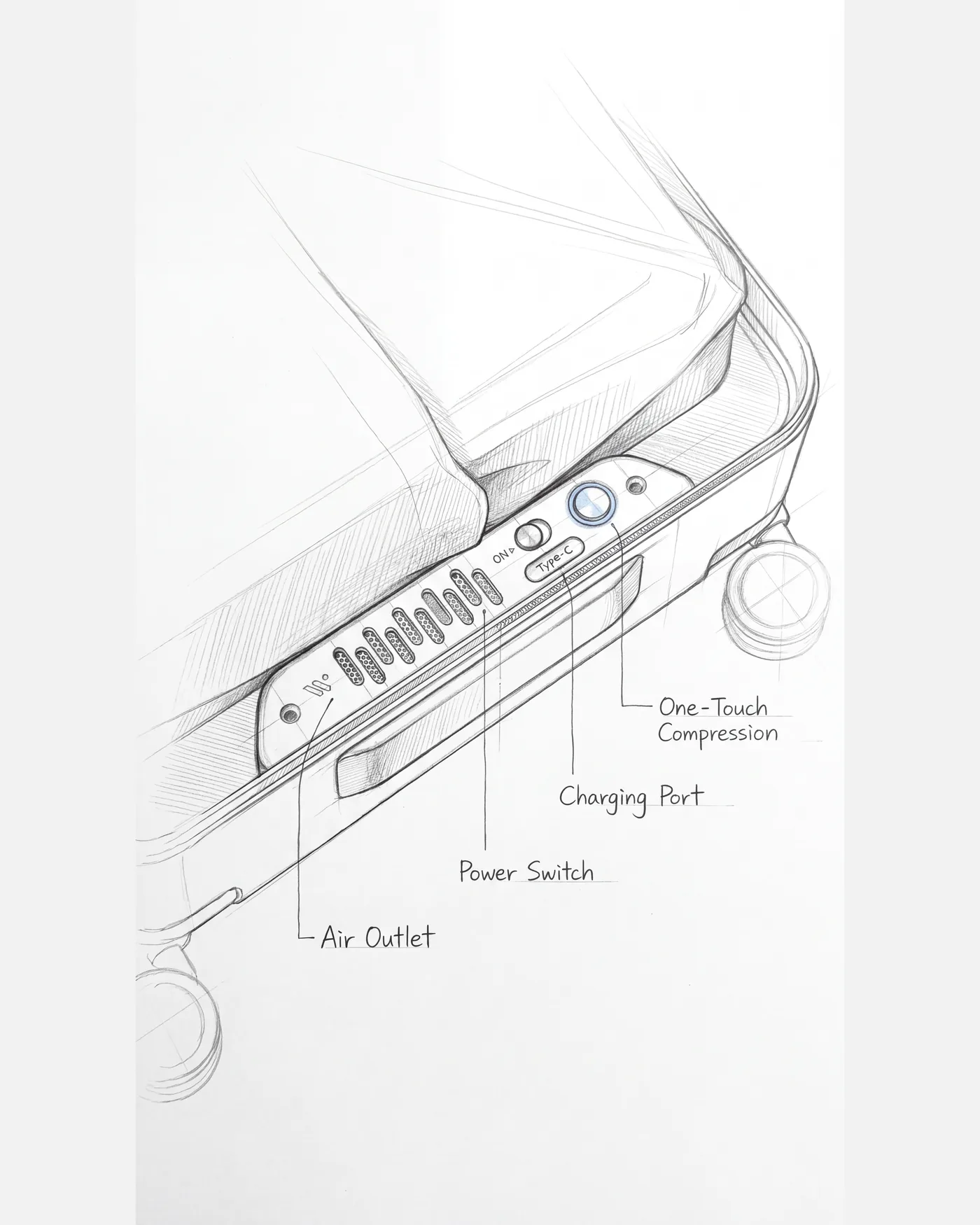
It took more than one try.
Several rounds of samples, and a few that did not survive testing. The hard part of ThinkWay was never the idea. It was making it real, and making it last.
A new brand has no history.
It can still have standards. We would rather explain how something works than tell you how it feels. Quality, but not stiff. Technology, in plain words.
Follow the build.
One email when the campaign opens.
No spam. One email when the campaign opens, one when it ships. Privacy